Casing
Size, weight, grade, inside diameter and condition.
1776 / FRAC PLUG
An aluminum frac plug embodiment built around the wedge-and-receiver sealing concept.
See the design reference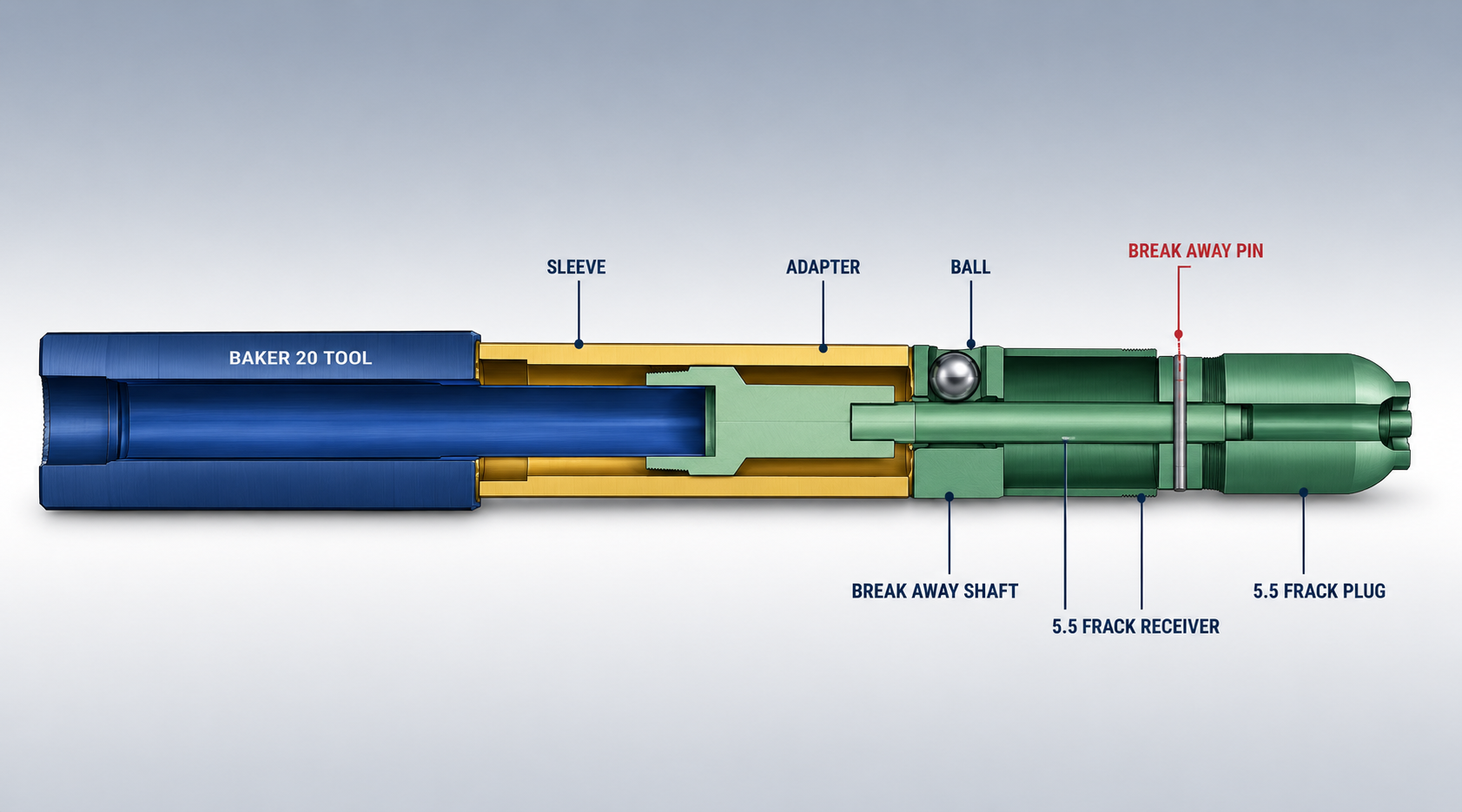
SEPTEMBER 2026 / REVISION A
Casing, material and mechanism references for the 5.5-inch configuration.
| Design item | Reference |
|---|---|
| Casing embodiment | 5.5-inch, 20 lb/ft P-110 |
| Plug material reference | 5086 aluminum |
| Core mechanism | Wedge-driven deformation of the receiver |
| Pressure designation on drawings | 9.2 ksi / 9,200 psi |
| Drawing revision | September 2026, Revision A |
9.2 ksi is the designation on the engineering drawings. Operating pressure, temperature and application limits require qualification data and engineering approval.
APPLICATION REVIEW
Use the latest approved configuration and documentation when evaluating a specific well.
Size, weight, grade, inside diameter and condition.
Required differential pressure and temperature.
Fluid chemistry and material compatibility.
Interface, setting action and release requirements.
Well conditions and the planned removal method.
Supporting test data and the approved operating procedure.
TECHNICAL QUESTIONS
It is the designation used on the engineering drawings. An operating pressure rating requires qualification evidence and engineering approval.
The concept permits engineering variations. The specific embodiment described here is for 5.5-inch, 20 lb/ft P-110 casing; other configurations require separate engineering confirmation.
A wedge expands the receiver radially. Integral sealing and wickered engagement features are designed to contact the casing during that deformation.
It illustrates the intended component movement and setting sequence. It is not a pressure test or a demonstration of field performance.